

Megan Epler Wood Joins The Explorers Club
Burlington, Vermont
May 19, 2026
For more information contact: supriya@eplerwood.com
Epler Wood expands her work at the intersection of exploration, conservation, and global environmental stewardship after 35 years dedicated to sustainable tourism
Megan Epler Wood; a globally recognized leader in the field of sustainable tourism, has joined The Explorers Club, headquartered in New York City. After decades shaping the fields of ecotourism and sustainable tourism, launching advanced research and digital education programs at major universities, and creating sustainable destination development and management programs in biodiverse countries worldwide; Epler Wood is now committed to leveraging global resources to finance advanced destination management and conservation worldwide.
Founded in 1904, The Explorers Club is a multidisciplinary professional society dedicated to advancing field research, scientific exploration, and conservation. Its members include scientists, explorers, and innovators from around the world addressing global challenges such as climate change, biodiversity loss, and human health.
“The challenges facing our planet require closer connections between conservation, science, the preservation of local well-being, and the generation of investment in a new generation of planetary health. I look forward to contributing to a community that has long been at the forefront of that effort, and to joining under the leadership of Barbara Doran at such an important moment for the Club.” Megan Epler Wood
Epler Wood’s Career in Science, Communication, & Conservation
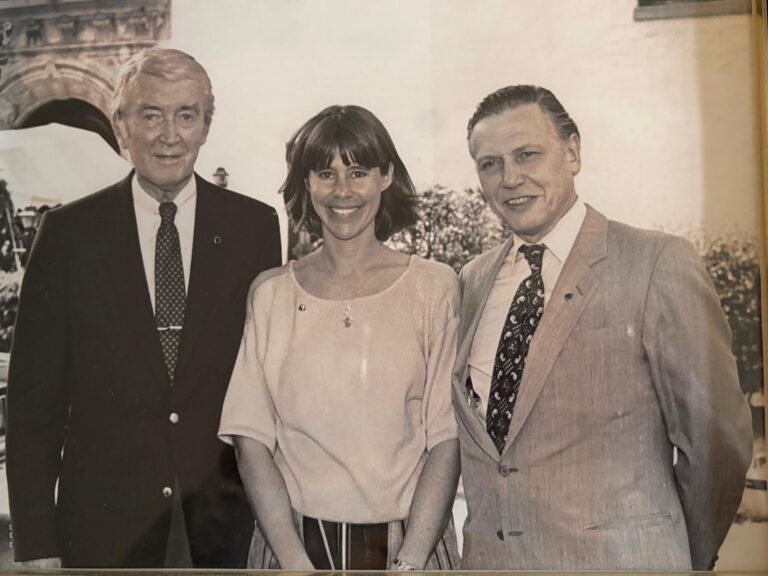
Megan Epler Wood began her career in field-based wildlife research and documentary production in Patagonia and the Tropical Andes, later working with World Wildlife Fund on global conservation communications. In that position, she fostered national public service campaigns for conservation with both Jimmy Stewart and Sir David Attenborough. She went on to co-found The Ecotourism Society, the first organization of its kind, to create academically- researched, locally vetted ground-up guidance for the profession using global technical forums and workshops on sustainable tourism practices worldwide.
Through her firm, EplerWood International, she has led destination development initiatives in more than 30 countries in collaboration with institutions including the World Bank, GIZ, and the Inter-American Development Bank. She later pioneered globally accessible, graduate degree-level courses on sustainable tourism at Harvard Extension School and authored Sustainable Tourism on a Finite Planet, now used as text worldwide. She then joined Cornell University, where she founded the Sustainable Tourism Asset Management Program (STAMP) at the Center for Sustainable Global Enterprise in 2017.
Epler Wood Goals for the Explorers Club
Through her membership in The Explorers Club, Epler Wood intends to deepen her engagement with interdisciplinary, field-based initiatives that connect tourism systems with scientific research, destination management, and conservation outcomes. Her work increasingly focuses on how exploration, evidence-based research, GIS tools, and improved regional governance can protect ecosystems and local cultures worldwide. Her most recent field work was undertaken in 2025-2026 in the El Yunque National Forest region of Puerto Rico, for the US Forest Service El Yunque and Cornell STAMP, where she is now Senior Strategic Development Advisor and Founding Managing Director, Emeritus.
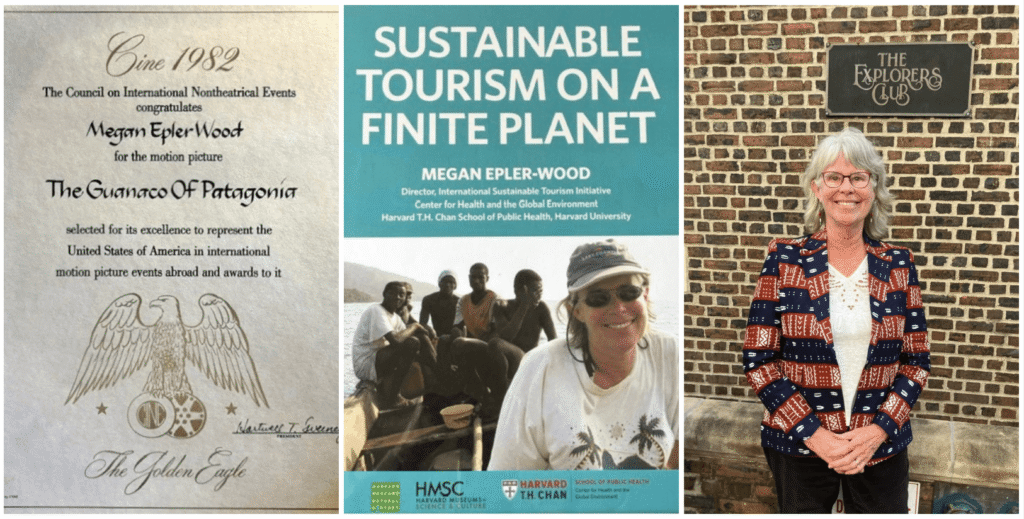
Biographical Profile: Megan Epler Wood
Field Origins in Wildlife Research and Exploration
Epler Wood has had a wide-ranging explorer’s career, which began by studying the sociobiology of guanacos, wild ancestors of llamas and alpacas, in Chilean Patagonia, on Tierra del Fuego and Torres del Paine National Park in 1980, recording their barking-style sounds that Darwin discussed in his own accounts of the region. Carrying a Nagra 3 for months and recording with shotgun mikes, and later analyzing sonograms, she reviewed the sociobiology of their communication system, inspired by her major professor Dr. William Franklin. Working in remote outposts for approximately nine months, she and her husband Gregory Epler Wood shot, edited and wrote the narration for their award-winning documentary The Guanaco of Patgonia film documentary; capturing guanaco behavior in the wilds of Patagonia.
Early Career in Global Conservation and Science Communication
Epler Wood began her conservation career at World Wildlife Fund–U.S. in the 1980s, contributing to documentary production, public interest campaigns, and museum-based lecture series featuring such figures as Dr. Sylvia Earle, Sir David Attenborough, and Dr. Jane Goodall alongside leading scientists including Drs. E.O. Wilson, Thomas Lovejoy and Russell Mittermeir.
Fulbright Research and Documentary Work in Biodiversity Hotspots
As soon as possible, Gregory and Megan returned to the field to shoot another wildlife documentary and received a joint Fulbright Award in Science Communications in 1986, to document the remarkable biodiversity in the Tropical Andes, just being scientifically proven to be one of the most biodiverse regions on earth. They produced the documentary Un Destino Nublado: Los Bosques Andinos Tropicales, highlighting the La Planada Nature Reserve, in southern Colombia, now protecting nearly 8000 acres and managed by the Indigenous Council of the Awa people. The documentary was supported and distributed by WWF-US throughout high biodiversity nations in Latin America for educational outreach and shown on national television in Colombia in 1988.
Documenting the Emergence of Ecotourism
Her final project in the field of wildlife documentaries, completed in 1990, was for National Audubon’s The Environmental Tourist: an Ecotourism Revolution hosted by Sam Waterston, for WTBS and PBS; which documented three important ecotourism regions of the world; Glacier National Park in the U.S.; Amboseli Park and Masai Mara National Reserve in Kenya; and the newly minted marine and biodiverse national reserves established in Belize. What was captured in the film was the full spectrum of benefits and challenges in the emerging field of ecotourism, presented with great insight by Dr. David Western, who played a foundational role in establishing Amboseli National Park, and shared his science-based field observations of tourism and conservation in Kenya and Tanzania on camera.
Founding the Global Ecotourism Movement
As the documentary was being completed, Western and Epler Wood both raised private foundation support to launch The Ecotourism Society (the first organization of its kind globally) bringing together the support and guidance of ecotourism business leaders, conservation scientists, academics, and international, national and local policymakers to develop models for tourism that supported local well-being and conservation goals worldwide.
Scaling Impact Through Global Development Assistance
By 2003, EplerWood founded her own company EplerWood International, in Burlington Vermont, which has implemented destination development projects at scale in over 30 countries working with the World Bank, InterAmerican Development Bank (IDB), the GIZ, and the former USAID.
Academic and Thought Leadership
In 2010, Megan Epler Wood began teaching at Harvard Extension School’s Sustainability Masters Degree Program, with pioneering courses on environmental management of tourism; regional tourism planning using GIS with Dr. Stephen Ervin and Dr. Vicente Moles; and ecotourism sustainable development. This work culminated in her book Sustainable Tourism on a Finite Planet; Environment, Business and Policy Solutions, which addresses the challenges of managing tourism’s growth in the face of climate change and resource depletion, which is now used globally as a textbook.
Advancing New Sustainable Tourism Models at Cornell University
She later joined Cornell University, where she founded the Cornell Sustainable Tourism Asset Management Program (STAMP) with Dr. Mark Milstein in 2017, advancing new approaches to managing tourism’s socio-cultural and environmental assets, in order to begin redirecting global tourism resources to their conservation. For this purpose, under Epler Wood’s leadership Cornell STAMP created the eCornell digital course, Sustainable Tourism Destination Management with support from GIZ, which offered over 750 students from emerging economies full support to study the key academically vetted methodologies behind her publication, Destinations at Risk, The Invisible Burden of Tourism.